The Bulgarian Supreme Court of Cassation with a major decision on online copyright infringement and ISPs liability
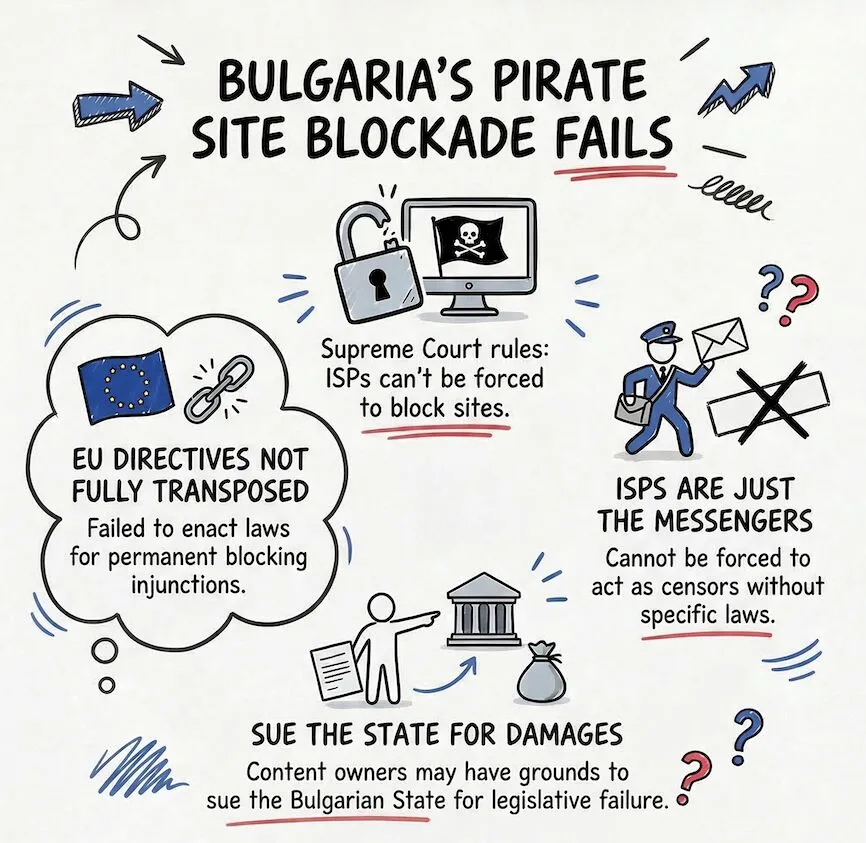
The Bulgarian Supreme Court of Cassation (SCC) has issued a final decision on online copyright infringement and the extent of internet service provider (ISP) liability in Bulgaria. The SCC held that, under current Bulgarian copyright legislation, music and film producers cannot obtain injunctions in standard civil/copyright proceedings to require ISPs to block access to well-known pirate websites (e.g., The Pirate Bay, Zamunda).
Website-blocking orders are a common enforcement tool in parts of the EU, allowing courts to require intermediaries (such as access providers) to take reasonable steps to prevent users from reaching specific domains or URLs that facilitate large-scale infringement. In this case, the key question was whether Bulgarian law currently provides a sufficiently clear basis for such orders against ISPs in “standard” copyright proceedings.
Below are the main points from the SCC’s decision and why they matter for businesses operating online.
For rightsholders, the decision increases the importance of choosing the correct enforcement pathway (and forum) when seeking to restrict access to infringing content in Bulgaria. For ISPs and other intermediaries, it provides additional support for resisting blocking requests that are not grounded in a clear, specific statutory procedure.
The SCC also noted that parties harmed by the failure to fully implement EU requirements may have a potential damages claim against the Bulgarian state (referring to ECJ case C-91/92). The panel was not unanimous: a dissenting opinion argued that Bulgarian law should be interpreted in conformity with EU directives to allow blocking injunctions against ISPs.